
Most monthly whiskey programs promise variety, yet many deliver the same familiar labels and a rushed pour you cannot properly judge. A quarterly blind box takes a different path. Instead of rotating through bottles you already recognize, it sends four unmarked samples from small American distilleries, then asks you to guess before the reveal. This article compares the two formats honestly, covering pace, learning value, cost, and what actually ends up in your glass. If you are weighing a Whiskey Subscription against other options, the differences below should make the decision easier.
Why the Monthly Pace Can Work Against Your Palate
Receiving a bottle or sample every four weeks sounds generous, but tasting well needs time. Whiskey rewards slow comparison, and a monthly cadence often turns each delivery into a quick pour before the next one lands. Palates tire, notes blur together, and the memory of last month fades before you can compare it with this one. A quarterly schedule gives you a full season with each release. You can revisit samples, re-taste them with a few drops of water, and let your preferences settle before new bottles arrive.
How Blind Tasting Changes What You Notice
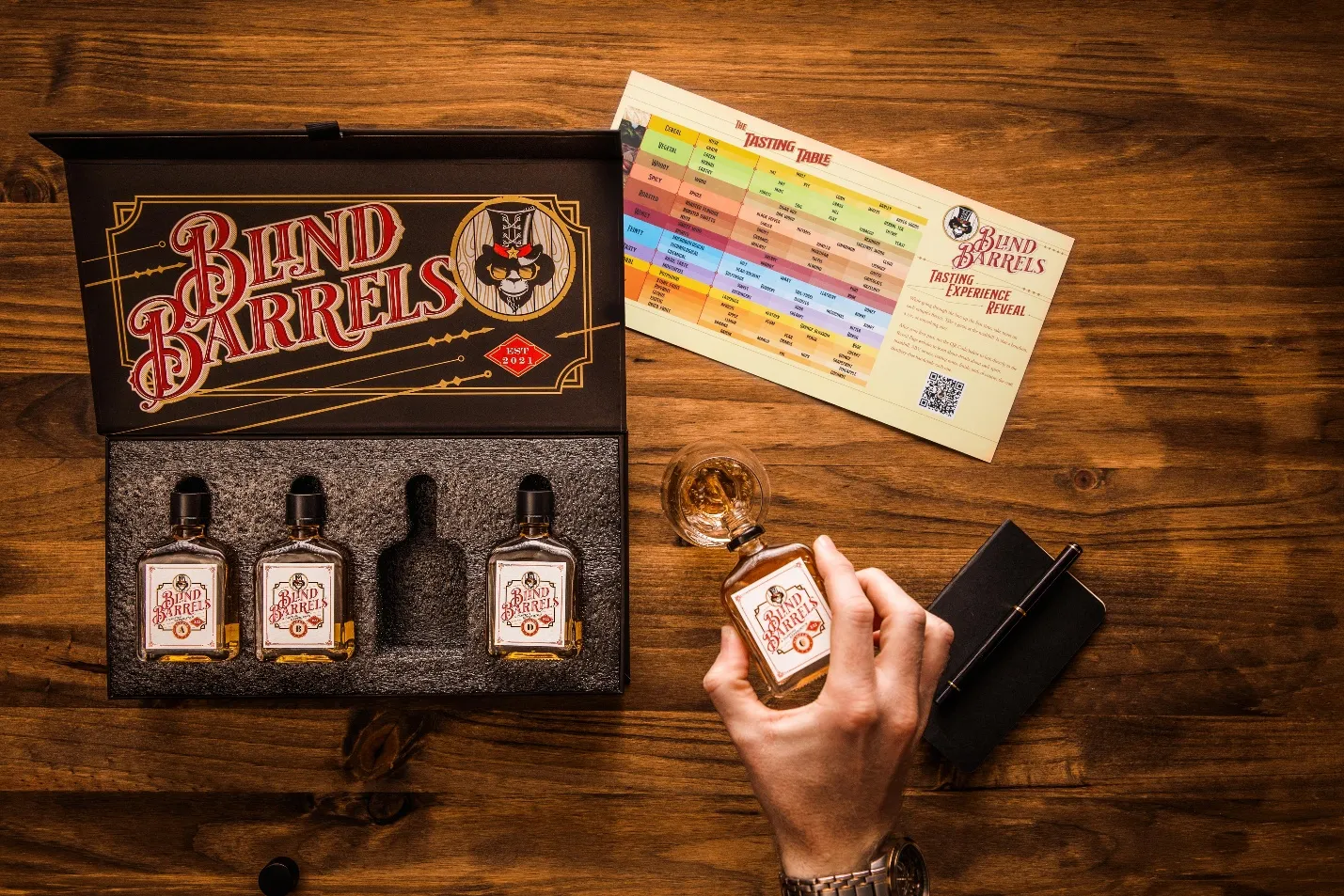
When the label is hidden, you stop tasting the reputation and start tasting the liquid. Each kit holds four 50 mL samples marked A to D. After tasting, you scan the QR code to start the built-in game and enter your guesses for age, proof, and whiskey type. The game scores how accurate your palate is before taking you to the reveal. You may learn that a young bourbon can taste older than expected, or that a cask strength pour can feel softer than its number suggests. Surprise becomes the teacher, and your score gives you a real benchmark for how well your palate is developing.
What Monthly Programs Typically Offer and Where They Fall Short
A typical Whiskey of the Month club ships one full bottle, often chosen from distilleries with wide distribution and plenty of marketing. That can suit someone who wants a steady stream of bottles for the home bar. The tradeoff is commitment, since you receive and pay for a full bottle whether or not you enjoy it. Costs add up quickly, and shelf space fills with whiskeys you may never finish. Samples let you test many styles first and spend real money only on the ones you truly love.
Where Craft Distilleries Fit into the Picture
Blind Barrels focuses on American craft producers that many drinkers never see on local shelves. Past kits have featured Mammoth Distilling from Michigan, Casey Jones from Kentucky, Southern Distilling from North Carolina, and Middle West Spirits from Ohio. Several of these releases were small batch or cask strength, and one was available outside its home state only to members. That kind of access is hard to copy with a standard monthly bottle, because small producers rarely have the volume to supply a large club every single month.
Value That Goes Beyond the Samples
The kit is only part of what you receive. After the game scores your guesses and reveals the whiskeys, members get the chance to buy full bottles of the ones they discovered at prices designed to be lower than what they would pay at the distillery. Bottles commonly range from about fifty to one hundred dollars, with flat-rate shipping of twenty dollars for up to three bottles. The annual plan costs 299.99 dollars and includes four quarterly kits, plus bonus kits and four tasting glasses during the first year, so the total value climbs well past the sticker price.
Which Format Suits Which Drinker
Choose a monthly bottle club if you want a steady supply of full bottles and already know what you like. Choose a quarterly blind kit if you are curious, enjoy games, or want to learn before you buy. It also works well as a gift, since the tasting table and scoring game make it social. Keep in mind that deliveries require an adult signature, and shipping is unavailable in Alaska, Hawaii, Utah, Arkansas, Massachusetts, Montana, and Mississippi, so check your address first.
Conclusion
Both formats have a place, but they serve different drinkers. Monthly bottle clubs reward people who want volume and convenience, while a quarterly blind kit rewards curiosity, patience, and a willingness to be wrong. Because the labels stay hidden, you judge flavor first and reputation second, and you finish each box with a clearer sense of your own taste. If that sounds like the better fit, you can explore current plans, bottle shop releases, and past reveals at blindbarrels.com and choose the pace that suits your glass.