

Red seems simple until a food developer has to make it work in a real recipe. A shade that looks bright in water may appear softer in dairy, darker in a gummy, or less steady after processing. That is why choosing a Beetroot Colour is not only about finding a red that looks attractive. The formula itself has to be considered: acidity, heat, light, fat or water content, and the way the product will be stored all have a say in the final result.
Beetroot and black carrot can both create red tones, but they do not behave exactly alike. Looking at the differences early makes product trials much more useful.
Beetroot Gives a Broad Red Range
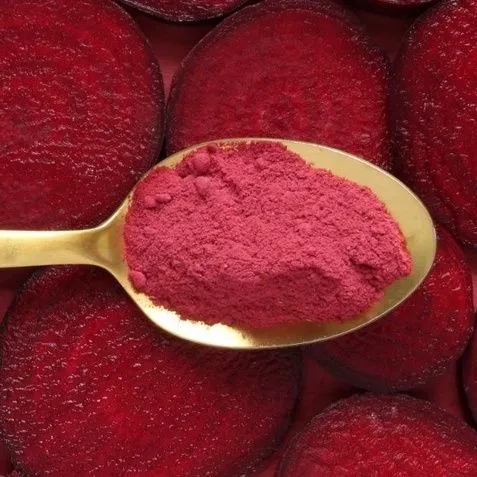
FoodRGB’s beetroot color is based on betanin, the pigment responsible for the familiar red of beets. The company offers beetroot options in powder, liquid, and oil formats, including custom formulations. Shades can move from light pink and fuchsia to a deeper red, depending on the concentration and product.
Its stated useful pH range is 3.0 to 8.0, which gives formulators room to test it across several food types. FoodRGB lists beverages, confectionery, ice cream, seasonings, baked goods, snacks, frozen foods, fruit preparations, popcorn and plant-based meat among possible applications.
One detail deserves attention: standard beetroot colors are not generally known for strong heat stability. FoodRGB does, however, list a special beetroot option with improved heat stability. For a product that goes through baking or another heating step, that version may be worth testing rather than assuming every beetroot format will respond the same way.
Black Carrot Has Its Own Strengths
Black carrot is different. It is rich in anthocyanin pigments and is described by FoodRGB as producing red-to-purple shades. The company supplies powder and liquid versions and notes that the color is water-soluble.
A Black Carrot color can be a useful option for more acidic products. FoodRGB gives it a preferred pH range of about 3.0 to 5.0 and describes it as having good resistance to acid, light, and heat. Listed applications include frozen beverages, fruit preparations, confectionery, baked goods, seasonings, pickled vegetables, juice, cocktails, mocktails, and jelly.
Those details make black carrot particularly interesting when a recipe already sits in an acidic range. The color may also move toward purple depending on the environment, so the finished food should always be checked rather than judging the ingredient by a sample on its own.
The Recipe Usually Makes the Choice
There is no universal winner between beetroot and black carrot. A developer working on ice cream, for example, may value beetroot’s pink-to-red range. Someone building an acidic fruit drink may want to trial black carrot because its stated working range fits that kind of formula more closely.
Appearance is only one part of the trial. Solubility matters, as does the point at which the color is added. Other ingredients can change how a shade is seen, especially in opaque foods. A red that looks vivid in a clear solution might appear muted once proteins, fats or solids are present.
Small trials help uncover these differences before a production run makes them expensive. They also give the development team a chance to compare shade, dispersion, and stability without changing a full commercial batch.
Check the Color Later, Not Just Today
A fresh sample can be misleading. The better question is how it looks after the same treatment the commercial product will receive.
If the food is heated, test it after heating. If it sits under retail lighting, include light exposure in the evaluation. Refrigerated and frozen products should be checked after realistic storage, not only when they are first mixed.
It is also useful to compare a few concentrations side by side. Sometimes the best-looking red is not the strongest dose. A slightly lighter addition may fit the product more naturally and avoid an overly intense finish.
Conclusion
Beetroot and black carrot both give food developers useful routes to natural red shades, but each brings different formulation characteristics. Beetroot offers a wide color range and several physical formats, while black carrot is especially relevant to acidic applications where anthocyanin-based color performs well.
Manufacturers can explore both options through foodrgb.com and use product-specific testing to see which one fits the recipe, process, and shelf conditions more comfortably. Choosing the source is only the beginning; the real decision is whether the color still works when the finished product reaches the customer.